
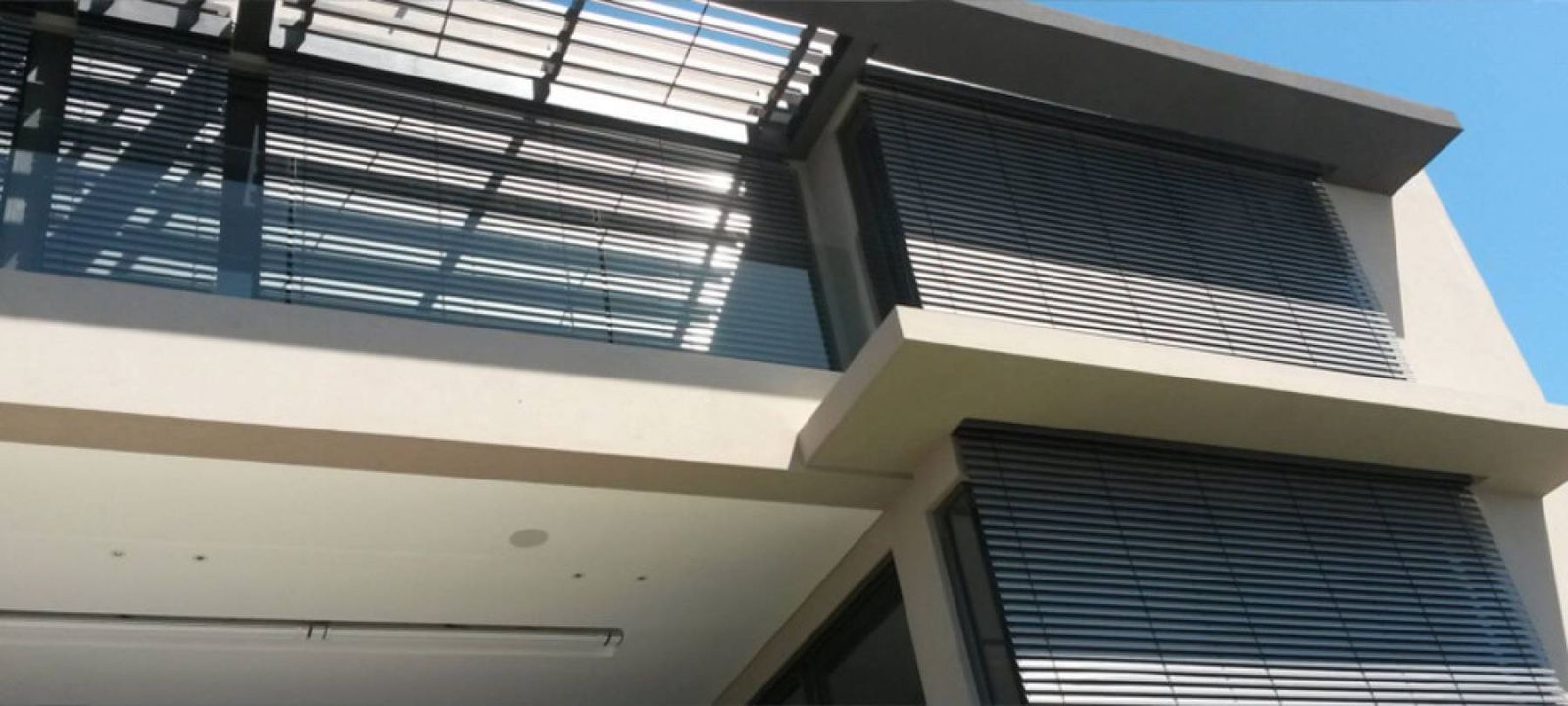
External shading tackles heat and glare at the facade — before the sun's energy becomes indoor heat.
The context
Daylight, comfort and energy — in balance.
Green building design places a premium on natural daylight, thermal comfort and responsible energy use. In South Africa, where solar radiation is intense, effective external shading is one of the most useful tools for managing heat, glare and occupant comfort.
WAREMA external venetian blinds and other external systems control solar gain before it reaches the glass. By reducing heat and glare at the facade, they help create more comfortable interiors and can reduce reliance on mechanical cooling and artificial lighting.
Why external shading matters
Where the blind sits changes everything.
Much of the sun's energy passes straight through glazing and is absorbed inside. Interior blinds help with glare and privacy, but by then the heat is already in the room.
Interior blind
Solar energy is already inside — heat builds up behind the blind.
External shading
Energy is deflected outside the glass, before it becomes indoor heat.
Illustrative comparison only. Real-world values depend on glazing, orientation and product.
WAREMA external venetian blinds
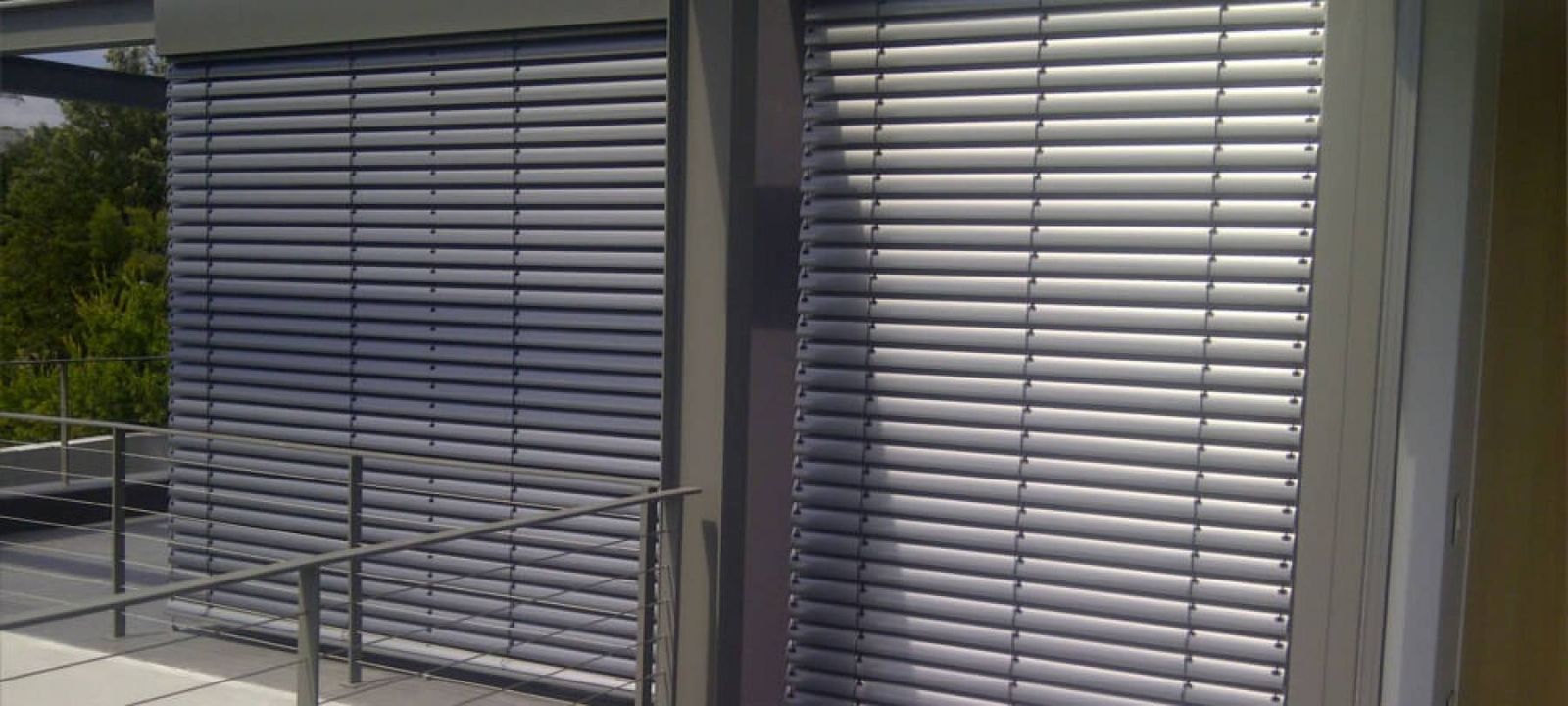
Adjustable control over light, glare and heat.
Angle the slats to cut harsh sun while letting useful daylight in. Paired with good glazing and intelligent controls, the blinds can track the sun through the day — closing down in bright conditions and retracting when it's dull.
Try it
Tilt the slats, tune the room
Drag the control to see how adjusting external venetian blinds changes the balance between daylight, view and heat — all before the sun reaches the glass.
Illustrative figures only. Actual performance depends on orientation, glazing and product.
Potential building performance benefits
What good external shading can deliver.
Indoor comfort
Less glare and direct solar heat in occupied spaces.
Better daylight
Adjustable slats redirect useful natural light into rooms.
Lower cooling demand
Less heat gain can mean less reliance on air-conditioning.
Less artificial lighting
Well-managed daylight reduces the need for lights by day.
Sustainable design
Supports Green Star and wider green-building performance goals.
Important project considerations
Shading is one part of the bigger picture.
Green Star outcomes depend on the whole building design, the project team, the assessment criteria and the supporting documentation. External shading can contribute to a better-performing building, but it should be planned alongside the facade, glazing, ventilation, lighting and control strategy.
- Product guidance for external shading applications
- Advice matched to building orientation and exposure
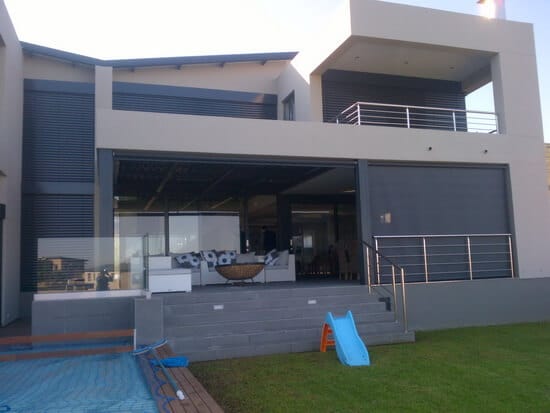
- Options for homes, offices and commercial projects
Free, no-obligation quote
Planning a home, office or commercial project? Let's talk shading.
Visit our Somerset West showroom or send us a few details — a consultant will be in touch to measure, advise and quote.